




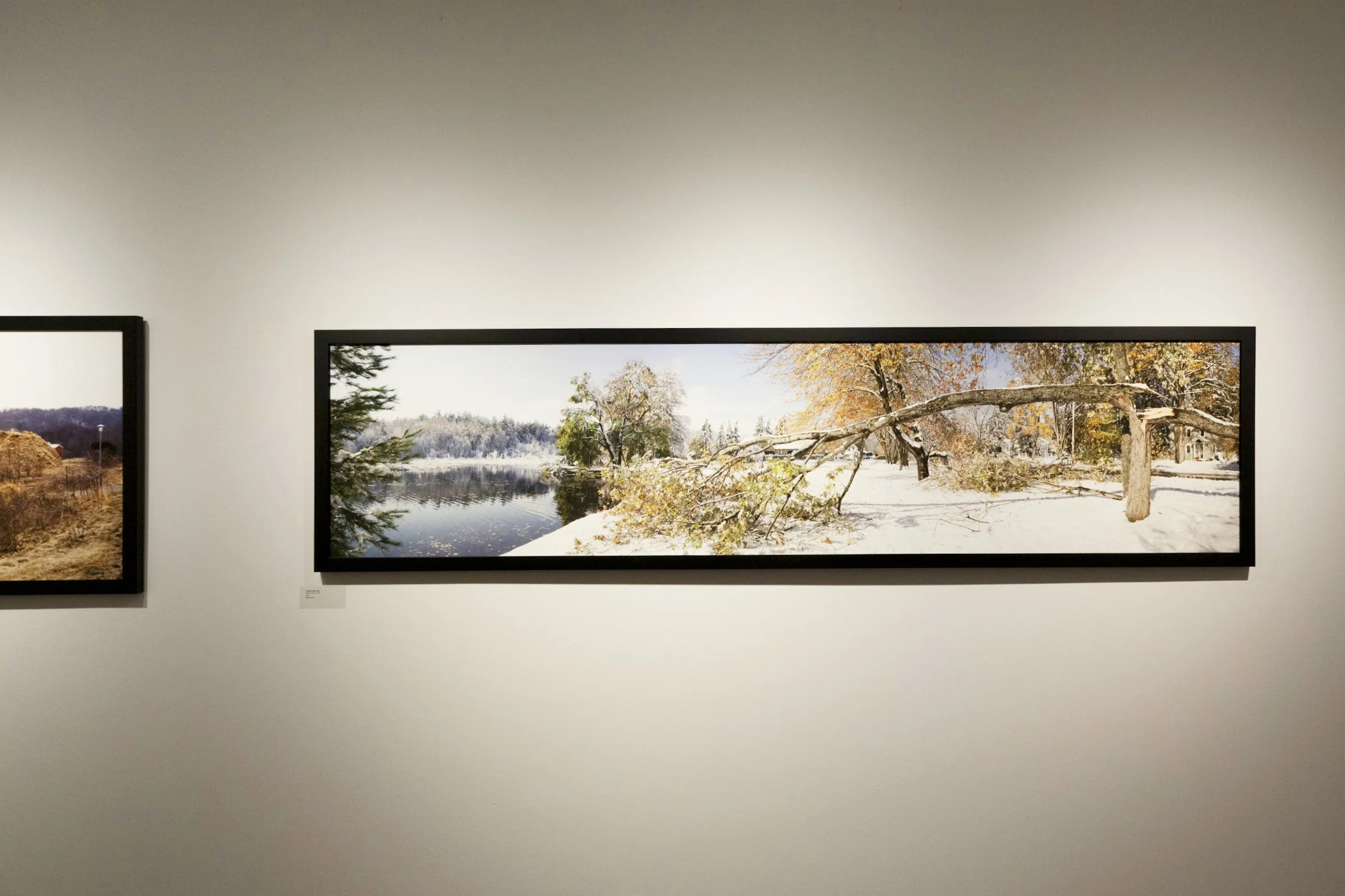
Unseasonable (2012) began with an extraordinary snowstorm in Connecticut in October 2011. Heavy snow fell on trees still carrying their autumn leaves, splitting century-old trunks and bending pines into unfamiliar shapes. Against a brilliant blue sky, the familiar New England landscape appeared almost artificial, as though two seasons had been superimposed. The scene suggested a collapse of natural time, an uncanny visualization of the climatic disruption that had previously seemed more abstract or distant.
At the same time, the expanding digital archive of the internet was producing another kind of temporal and spatial collapse. Historical photographs, contemporary images, scientific records, decorative objects, and fictional representations circulated alongside one another, detached from their original contexts and newly available for comparison and association. This flattening of historical and categorical distinctions was both creatively productive and psychologically unsettling.
One recurring point of connection was moiré, an interference pattern produced when repetitive patterns overlap. I recognized it in the window screens of my parents’ house, one of which was scored by the tip of a falling oak tree during the storm; in the resemblance of overlapping screens to woodgrain; in the patterned fabrics and decorative surfaces of the Victorian era; and in the visual aberrations that can occur when repeating patterns are captured by a digital image sensor.
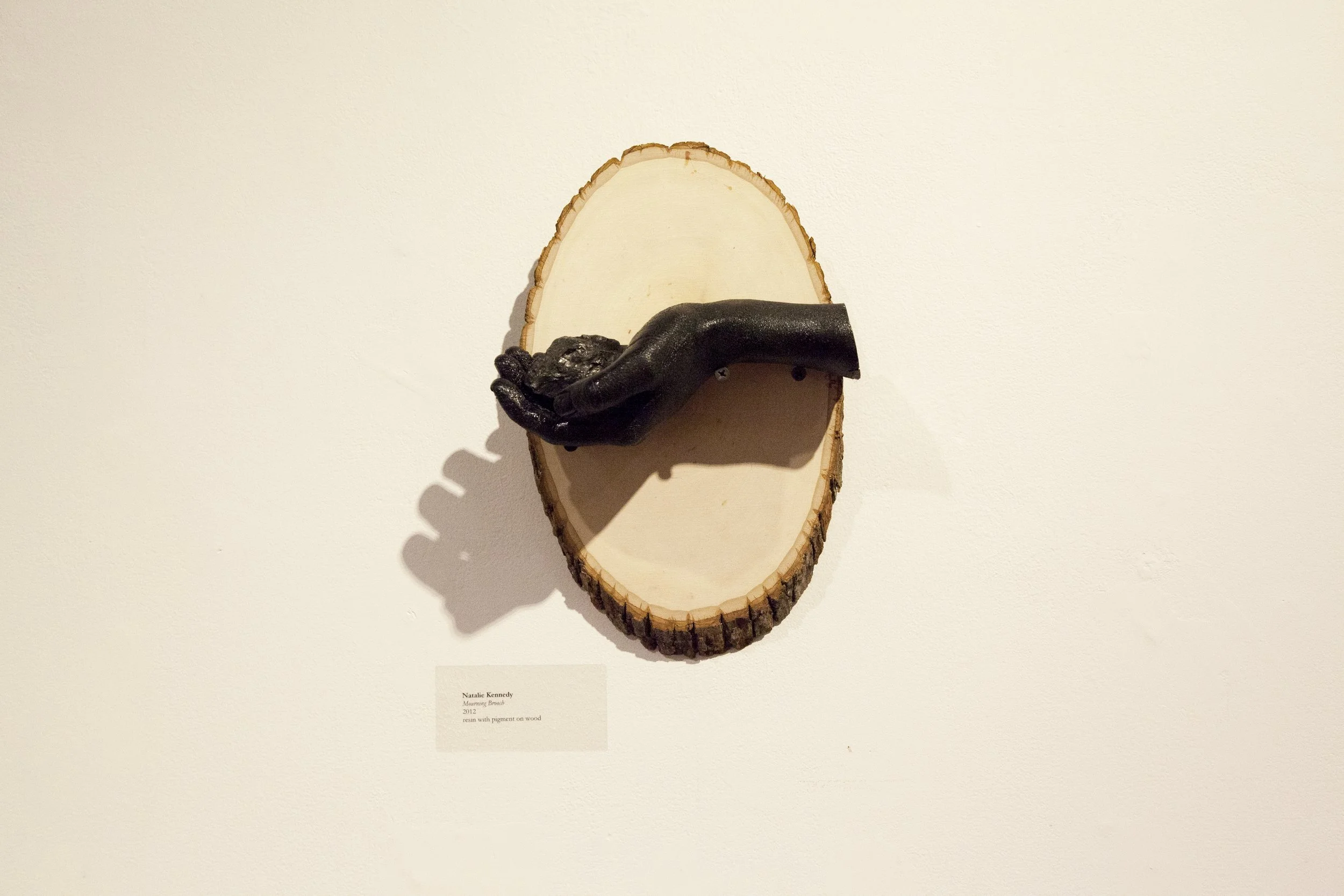
The Victorian era offered another convergence of these concerns. Industrialization, the widespread adoption of photography, and an elaborate material culture surrounding death and remembrance suggested new relationships between technological change, memory, and the preservation of experience. Mourning keepsakes, miniature interiors, and Wardian cases, which enclosed living landscapes behind glass, offered ways of considering how nature and memory might be collected, contained, and reconstructed or simulated.
The Industrial Revolution also connected these histories to a far more distant past. Prehistoric forests, insects preserved in amber, and the transformation of ancient organic matter into fossil fuels introduced the immense timescales of geological change. Formed over millions of years and consumed within a remarkably brief period of human history, fossil fuels made possible the industrial and technological systems on which modern life had become dependent. The storm, which left much of Connecticut without electricity for weeks, exposed the fragility of that dependence. The disruption of everyday life brought our reliance on industrial infrastructure into immediate focus, while the extraordinary appearance of the landscape offered an uncanny visual expression of the changing climate.
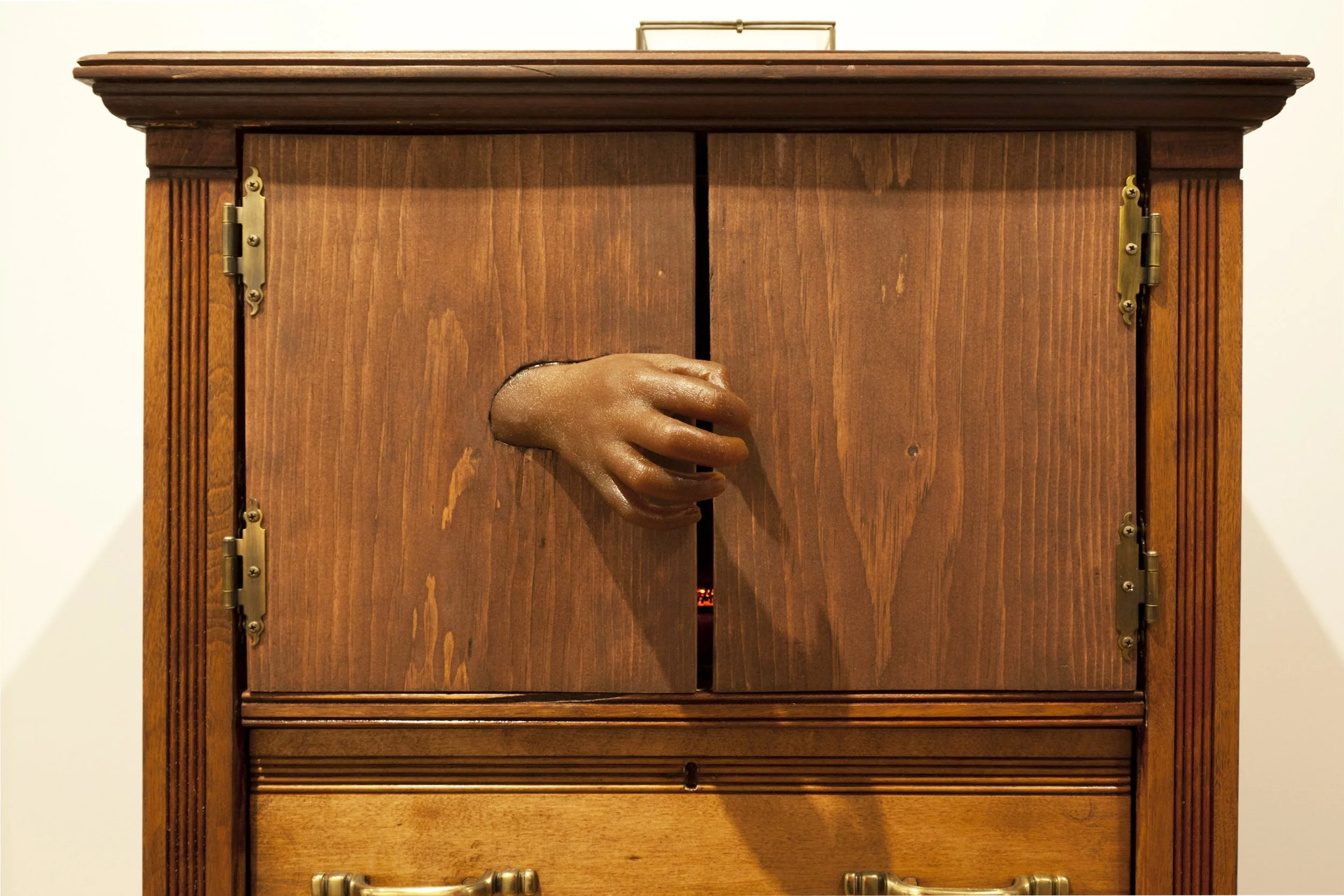
Through photography, sculpture, and constructed environments, Unseasonable brought these histories and associations into physical proximity, inviting visitors to explore and interact with them. Preserved tree stumps emerged from the gallery’s polished wooden floor, their rough, truncated forms contrasting with the gleaming surface around them. They offered visitors a place to rest, even as they appeared to grow out of the floor itself.